

Understanding Brazil through its faith communities: a conversation with Ana Carolina Evangelista

Ana Carolina Evangelista
Photo: Personal Archive
For decades, the place of religion in Brazilian society has been the subject of research and public debate. In a diverse and officially secular country, the 1988 Federal Constitution guarantees freedom of religion and reinforces the State’s duty to respect and protect all forms of faith expression equally, including the absence of religion, as part of its commitment to democracy.
Ana Carolina Evangelista, a researcher at ISER, the Institute for the Study of Religion, where she also serves as executive director, notes that conversations about the religious, religion, and religiosities are often shaped by a modern perspective that tends to relegate this field to the private sphere - something intimate, confined to the “appropriate spaces” for its expression. She argues that this view overlooks the fact that religion is a social phenomenon.
“To speak of religiosity in Brazil is, ultimately, to speak of the country itself.It is to speak of identity, culture, and social and political action across all regions. It is to speak of different configurations of the public sphere shaped by dominant religions and by the many spiritualities present among Brazilians,” she says
She adds that religion must be understood broadly, in the plural, and in its universality, taking into account the diversity of particular forms related to beliefs, myths, rituals, and collective organizations, all embedded in specific social, cultural, and historical contexts. “Religions and religiosities strongly shape cultural expressions in the country, and we are dealing with porous fields that interpenetrate one another, whether as belief or as culture.”
Deepening this idea of porous fields, Ana Carolina - who in recent years has become a leading voice in the public debate, in both the national and international press, on the participation of religious actors in Brazilian politics - highlights the regional differences and local nuances present in Brazilian households.
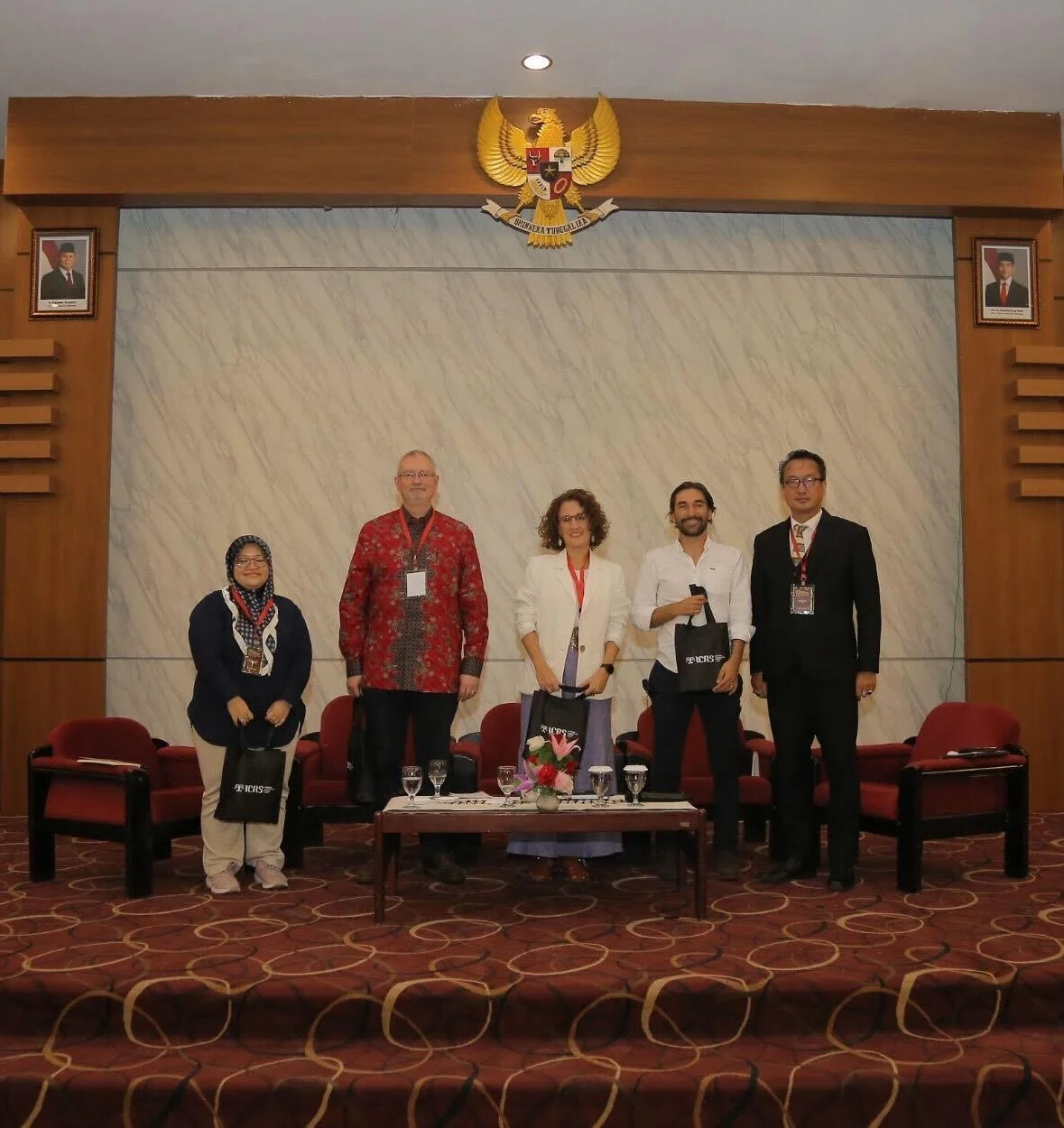
Ana Carolina at the Conference of the Indone- sian Consortium for Religious Studies (ICRS)
Photo courtesy of ISER
“Brazil is experiencing a moment of religious pluralization and transition, moving from a country with an overwhelming Catholic majority until the 1980s to a context of significant change,” she observes. She adds that the most recent Census*, from 2022, brought data that confirms this scenario. “Approximately 57% Catholic, 27% evangelical, 10% with no religion - including atheists and agnostics - and 7% divided among other religions.”
Despite a gradual decline over the past decades, Catholics and evangelicals together still accounted for more than 90% of the Brazilian population up to the 1991 Census. It was only in the 2000 Census that the combined share of these two Christian groups fell to 89.2%, dropping below 90% for the first time. In the 2022 Census, the total share of Catholics and evangelicals corresponds to 83.8% of the population. In a long-term comparison, from 1980 to 2022, this represents a reduction of approximately 12 percentage points in the proportion of Christians in the country.
Ana Carolina Evangelista explains that, in relation to the continuous growth of evangelicals, a kind of evangelical belt has taken shape over the past 40 years in Brazil’s urban outskirts. “It is a religious segment that grows across all social strata, but is predominantly located at the base of the social pyramid, in urban and peripheral areas. We are also talking about a population that is largely low-income, Black, and female,” she notes. She emphasizes that, even so, there is significant religious mixing within this population.
“A large part of the portrait of Brazilian families in the urban outskirts across the country is made up of households led by Black evangelical women, but with significant religious mixing among their members and, often, with dual belonging*. The Catholic grandmother who remains Catholic but also attends the terreiro [an Afro-Brazilian religious temple]; the Catholic mother who converted and is now evangelical and has children and nieces or nephews who still identify as ‘without religion’ because they have not yet found their religious identification and who, increasingly after the 1988 Constitution, have the freedom to say they have no religion.”
To better understand this combination in the country, ISER conducts quantitative and qualitative studies on the religious field in all its diversity, as well as on politics and social life in their different dimensions. Ana Carolina notes that these studies allow society to understand, in a more detailed and nuanced way, the context of faith communities, enabling people to recognize themselves in it and identify the challenges involved in strengthening agendas of rights and socio-environmental justice.
ISER will soon release the national quantitative study Brasil e Vida Pública (Brazil and Public Life), which, according to its executive director, will offer a portrait of the present. “A snapshot of religious mobility, practices, dual belonging, values, political views, social demands, and everyday cultural and media habits,” she explains.
“The study began with a series of central questions about the country and its transformations: how Brazil divides into several ‘Brazils’ when we look closely at social groups and their religious identities; where to place the contradictions of our people; what kind of Brazil younger generations are demanding; what role religion and religiosities play in a country where they seem to be everywhere, including in institutional politics; how religious symbols, values, grammars, and languages shape the behavior and thinking of Brazilians; and how regional, gender, racial, and income differences cut across these relationships and intersections,” she says, adding that the study will offer a mirror of Brazilians’ religious profile. “Along with important clues for understanding our relationship with religion and the religious across different dimensions,” she concludes.
*The IBGE Demographic Census is a survey conducted every ten years to portray the Brazilian population and map its social and economic characteristics and living conditions.
*Dual religious belonging refers to the simultaneous identification with more than one religious tradition, or to participation in practices and rituals from different religions.