

Culture as infrastructure for change: a conversation with Jaqueline Fernandes
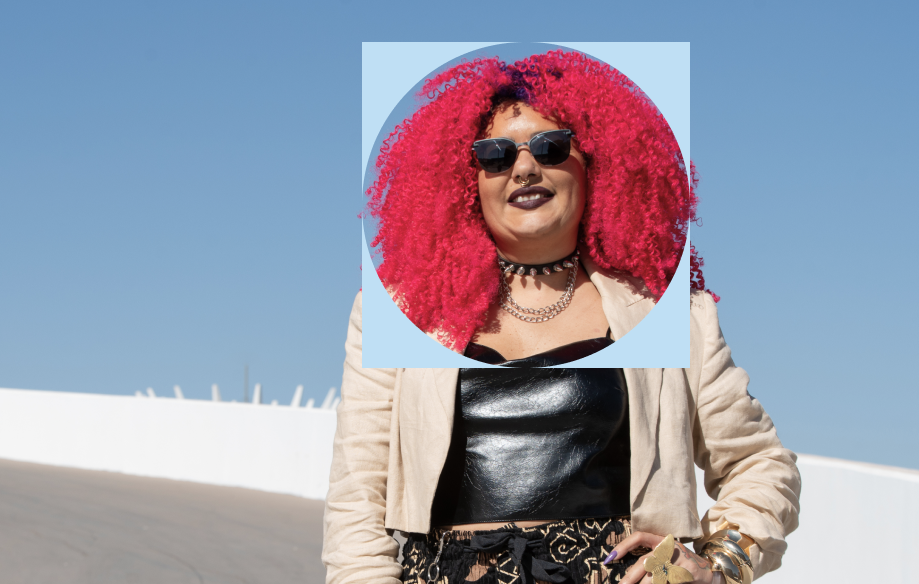
Jaqueline Fernandes
Photo: Tatiana Reis
Around 300,000 people took to the streets of Brasília during the Marcha das Mulheres Negras por Reparação e Bem-viver (Black Women’s March for Reparations and Living Well). Built through a collaborative and strategic effort to broaden participation, the 2025 edition, ten years after the first march, highlighted culture as both a communications and political strategy. In the lead-up to the march, and on November 25 itself, activations, including performances and celebrations, placed culture at the center of the mobilization.
Although applied on a large scale for the first time in a March edition, the understanding of culture as a pillar of mobilization comes from the Black movement, whose legacy refuses to separate political struggle from cultural and collective expression. In the Black Women’s March for Reparations and Living Well, Jaqueline Fernandes played a central role in translating this understanding into an experience of joy and shared participation.
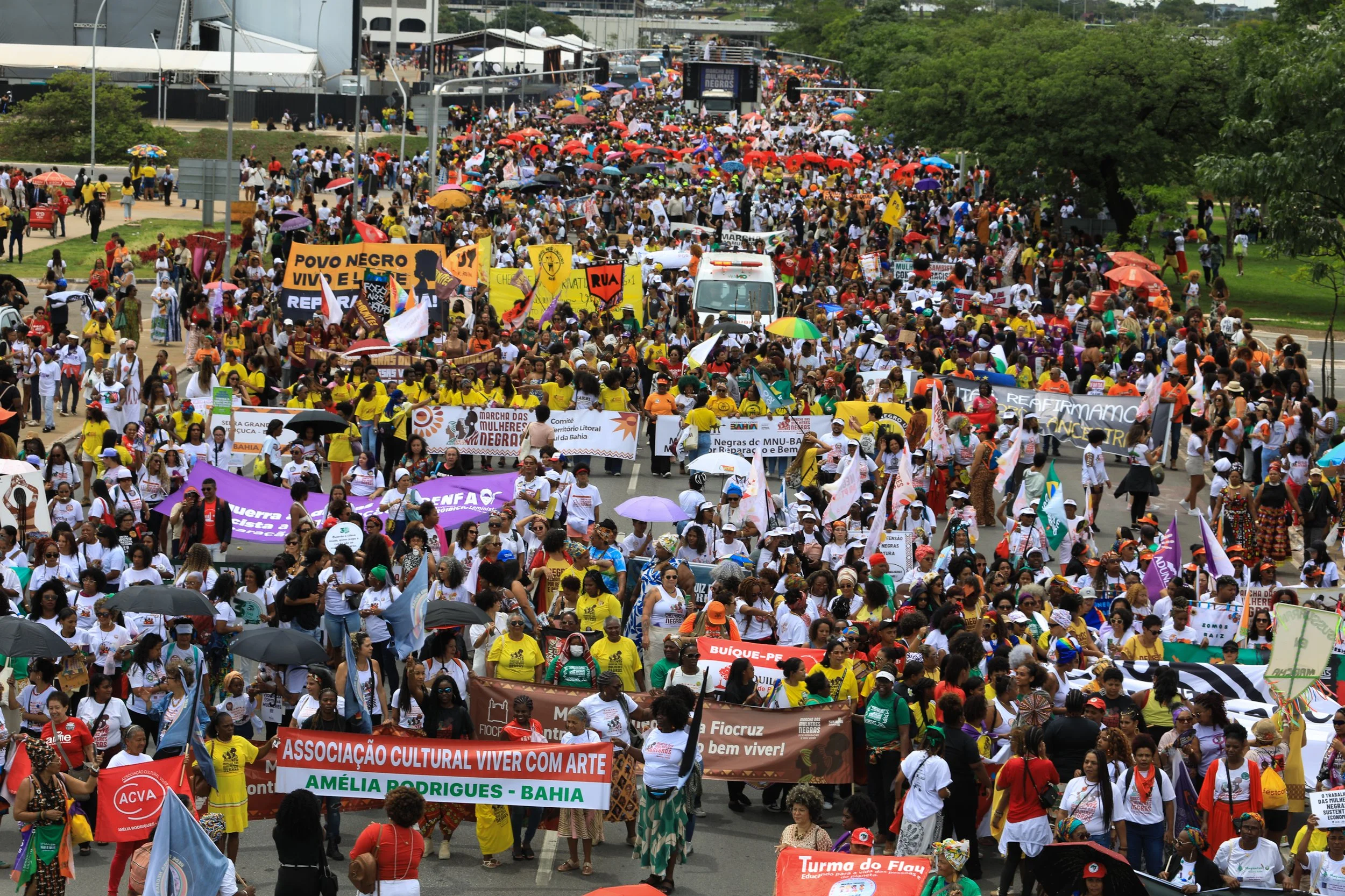
Photo: Dino Santos / Reproduction
A cultural manager, artist, music curator, and journalist, Jaqueline is the founder and president of the Afrolatinas Institute, the creator and general director of the Latinidades Festival, and the dean of Afrolatinas University. Throughout her career, she has developed training programs, cultural production initiatives, and advocacy efforts, which made her hopeful when the March defined culture as its communication method.
“This choice carries symbolic and strategic value. Culture should not be understood as an ‘interlude’ or entertainment, but as an infrastructure for transformation. Receiving support focused exclusively on culture recognizes, in practice, that the struggle for reparations is also carried out through narratives, languages, memory, and creation, something that has historically been and continues to be rendered invisible or treated as ‘ornament.’ This kind of support not only makes an event possible; it protects and strengthens an ecosystem,” she celebrates.
For Jaqueline, investing in culture should not be treated as an accessory resource, dependent on support directed at other areas of the project, but as a leading strategy. “By placing culture at the center, the March gained a repertoire that could be shared and multiple entry points for different audiences, because the language of the arts and artistic expression has the ability to translate complex themes into images, sound, aesthetics, body language, and performance.”
Expanding this shared repertoire helped affirm that singing, dancing, and marching together are themselves political acts, and it led the March’s organizers to invest in communication tools such as a jingle. Composed and performed by Bahian artist Larissa Luz, produced by Latinidades, the jingle provided a unified sound and a recognizable identity for the call to action.
Titled “Mete Marcha Negona Rumo ao Infinito” [a phrase that can be understood as an energetic call for Black women to move forward boldly] and featuring lines such as “Toda mulher negra move o mundo” (“Every Black woman moves the world”), the jingle reached a wide audience and even inspired a video choreography. This fit perfectly with one of the most effective forms of online engagement in 2025. “The choreography created by Aline Maia went viral among people who would not have naturally come across the March’s content,” Jaqueline explains.
When reflecting on the inspiration the March generates by affirming culture as a powerful arena for narrative contestation, capable of mobilizing awareness and driving action for racial justice and reparations, Jaqueline also turns to her own path. “I learned that culture emerges from a symbolic infrastructure that shapes common sense, struggles, disputes, and ways of living. Artistic expressions amplify this to its highest intensity. When the power of arts and culture is underestimated, we leave room for hegemonic and symbolic forces to continue naturalizing inequalities. Conversely, when culture is embraced as a site of contestation, it becomes a tool to subvert stereotypes, dismantle cultural racism, and bring back to the center memories and experiences that were pushed to the margins,” she says.
She underscores that racial justice and reparations are also built through recognition, the reconstruction of meaning, and historical redress. “To contest culture is to contest the official narrative, to question the version of history that was told as if it were the only one, and to restore legitimacy to ways of life, knowledge systems, and territories that have resisted erasure. This has a direct impact on how society behaves, because culture carries enormous pedagogical power. It offers structures of meaning that people repeat, sing, and learn to admire or to reject.”
For Jaqueline, this experience helped her work collaboratively with the March’s organizers and elevate art and cultural expression as pathways to reach places where public policy often cannot. “We were able to translate complex issues into a sensitive language, generating identification and expanding the debate beyond already politicized spaces. Art opens doors for people who do not yet see themselves reflected in the issue to recognize themselves and, from there, to get involved,” she explains.
It is at this point that Jaqueline recognizes the power of the narratives produced by Black women and some of the legacies the March may leave behind. “When Black women tell their own stories, they cease to be objects of representation and become political subjects, disputing meaning, producing references, and expanding the boundaries of what is possible. I hold onto the idea that culture is a battlefield where worldviews are validated, contested, or transformed. That’s why investing in culture is investing in racial justice and reparations: structural change also unfolds on the symbolic plane, in the collective imagination, and in the values that shape public and private decisions,” she concludes.