

Thais Lazzeri and information integrity beyond COP30
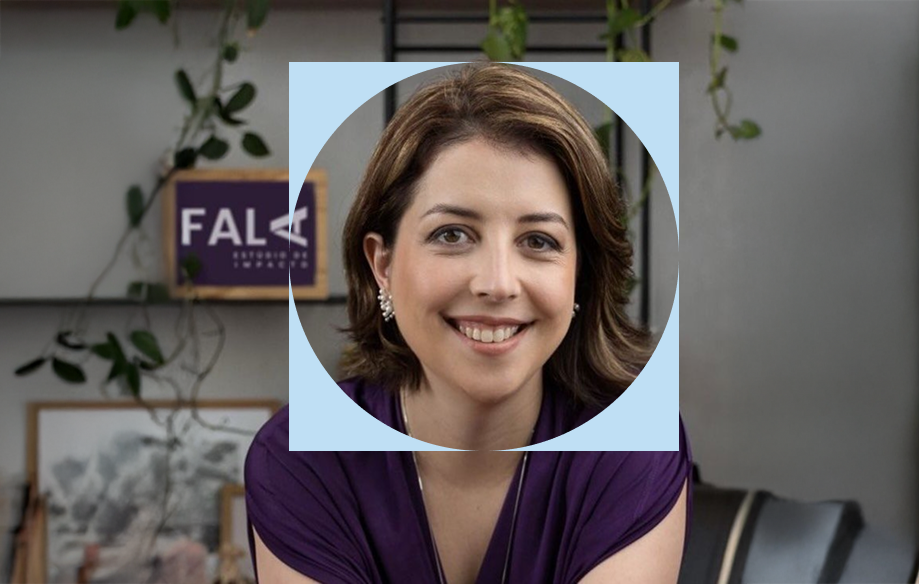
Thais Lazzeri
Photo courtesy of FALA
At the 30th United Nations Climate Change Conference (COP30), held in Belém, Brazil, in November 2025, many speeches were shaped by moral appeals, i.e., values and perceptions related to justice, responsibility, and priorities within the climate agenda, as well as by traditional technical mechanisms tied to the conventional model of climate negotiation and communication.
This model relies on long-term targets, financial instruments that are largely invisible to the public, and an abstract institutional language often disconnected from the reality of those observing the conference from the outside, while dealing with violence, unemployment, and other issues that feel far more urgent in their daily lives. This dynamic increases the likelihood that the climate agenda will be perceived as elitist, difficult to grasp, and distant from people’s lived experiences. The limited effectiveness of certain narratives is closely linked to how Brazilian society understands the climate agenda.
The emotional and cognitive exhaustion that comes from trying to engage with problems perceived as unsolvable or permanently politicized also distances people from the issue. When they do not feel part of the debate, many begin to accept that the future will be decided by others - typically those who master technical language and occupy decision-making spaces - while exposure to disinformation grows, making it increasingly difficult to distinguish what is real from what is not.
Thais Lazzeri, director and founder of FALA, a Brazilian impact studio that drives social change through communication, storytelling, and strategy, argues that climate disinformation does not persist because of isolated pieces of content. “It is sustained by a structured logic of narrative circulation, backed by resources. This logic organizes emotions, shapes identities, influences decisions, and produces very concrete material effects. Confronting it, therefore, is not just a matter of factual correction, but of reorganizing the narrative ecosystem in which public decisions are made.”
The challenge is not only to communicate better, but to build an ecosystem capable of testing, measuring, learning from, and sharing communication strategies for impact. “Without this cycle - mapping, experimentation, measurement, and systematization -the democratic field remains in the realm of abstraction: it recognizes that communication matters, but cannot demonstrate how it changes decisions, policies, or behaviors,” she says. She highlights as a central point that storytelling, when integrated into a systemic strategy, makes the cost of disinformation visible by revealing its concrete consequences in people’s lives, whether in the implementation of public policies, the protection of rights, or the institutional trust placed in organizations working on the ground.
“The democratic field has historically underestimated this dimension, treating communication as a product or deliverable rather than as infrastructure,” she reflects. She adds that, at FALA, they have been proposing and testing an approach in which communication is structural, cross-cutting, and integrated with advocacy, research, and coalition-building.
“If disinformation operates as a system, then the response must operate as a system as well. And storytelling, in this context, moves beyond aesthetics and becomes a force for structural influence. What we saw at COP30 was this logic operating at scale. When narrative, coalition, and political momentum align, communication stops merely recounting the story and begins to change its trajectory.”
A concrete demonstration that communication, when designed as strategy rather than accessory, can generate real impact is Mentira Tem Preço (Lies Have a Price), a dossier developed by FALA. The first edition of the dossier was distributed during the pre-COP to special envoys, as part of an ongoing dialogue. At COP30, FALA released an expanded version in three languages (Portuguese, English, and Spanish).
After participating in key panels at COP30 and appearing in national and international media outlets, the campaign reached half a million people in eight weeks. “But more important than the numbers was the shift the dossier triggered in the debate. It helped bring greater depth to the issue in media coverage. The discussion stopped being episodic and began to appear in structural analyses of climate, democracy, bioeconomy, agriculture, migration, women’s rights, and digital rights. If politics is a contest of narratives, then a strategic document is an instrument of power.”

Thais Lazzeri at a CAAD event during COP30, in Belém
Photo courtesy of FALA
Reflecting the growing urgency of addressing climate disinformation, information integrity gained formal recognition within the COP agenda as a condition for climate governability. For the first time, the term was incorporated into the final official text of the Conference of the Parties. “This moves the debate to a different institutional level. When a concept is included in the COP’s final document, it stops being advocacy and becomes part of the vocabulary of global governance. COP30 was historic. But most importantly, it showed that information integrity is indispensable infrastructure for democracy,” Thais celebrates.
More than generating immediate new support, the presence of information integrity at the COP opened space for new strategic conversations. “Support is not an event. It is a process. Anyone working on systemic change knows that solid funding comes from shared vision and long-term commitment, and that it takes time,” Thais explains, adding that what emerged after COP30 was a shift in scale. “First, there was a structural transformation in the political environment: the term stopped circulating only in specialized forums and became part of the vocabulary of climate governance. That changes the terrain on which all of us operate. Then there was a narrative shift. A topic that, just a few years ago, was seen as technical and peripheral began to be treated as a pillar of climate democracy.”
As new fields join this conversation, information integrity begins to appear more clearly on the public agenda. For Thais, this represents an important institutional step forward, but she cautions that progress is not the same as consolidation. “What we’ve seen so far is the political recognition of the issue. The next step is turning recognition into structure,” she says.
For Thais, it is also necessary to advance integration with other sectors, broadening the understanding that information integrity is not a sector-specific issue but a transversal one.