

In the ballroom, a word stops being a code and becomes belonging
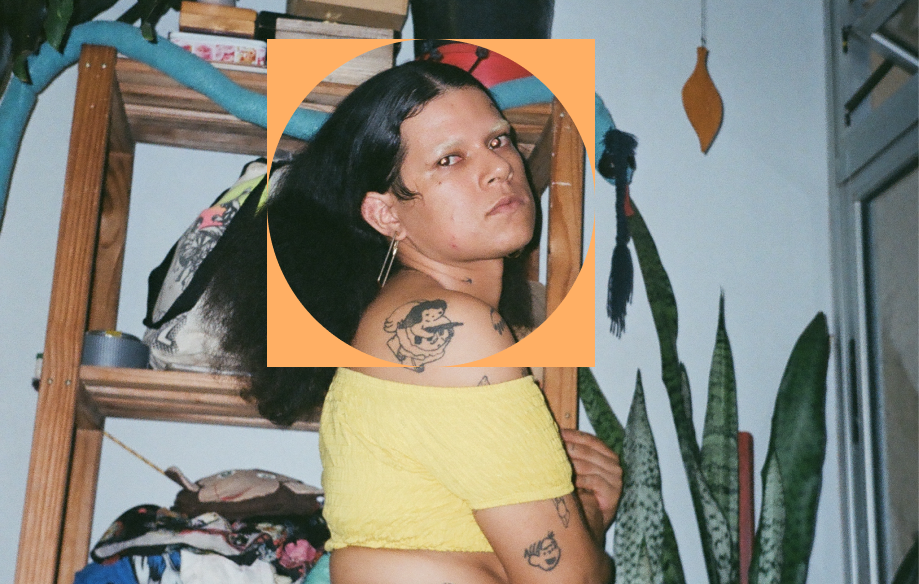
Yná Kabe Rodríguez Olfenza
Photo: Rafaelly La Conga Rosa
More than a political act and a call for reparations and rights, the Marcha das Mulheres Negras por Reparação e Bem Viver, or Black Women’s March for Reparations and Living Well, showed that struggle and celebration can march side by side, affirming the possibility of women with different bodies, origins, and life paths standing together and alive, even in the face of the profound inequalities and lack of access to rights that affect Black women in Brazil.
This cultural lens also helped ensure that more dreams converged at the March, building bridges and alliances through the presence of trans women and travestis*. Through intergenerational dialogue and the visibility of thematic committees, the mobilization forged a legacy of political language - one grounded in connection rather than mere demarcation.
This approach also made it possible to spotlight trans women and travestis at different moments throughout the program, from the November 25 ceremony to the celebration of ballroom culture two days earlier during the event “1 Million Faq Queens – The Revolution of the Dolls (1MFQNs),” held at the University of Brasília (UnB) as part of the pre-March activities.
Ballroom culture was celebrated in Brasília as one of the most powerful technologies of resistance within the Black LGBTQIAPN+* community. Yná Kabe Rodríguez Olfenza served as a bridge between the March’s organizing team and the ballroom scene and was one of the event’s creators. An artist, curator, and researcher, she holds a master’s degree from UnB in the Methods and Processes in Contemporary Art research line.
Yná has built a trajectory that weaves together artistic practice, cultural project management, independent curatorship, and the development of disruptive educational initiatives, an experience that gives real weight to her description of the encounter between ballroom culture and the March as “immeasurable.” “It was probably one of the projects I’ve taken part in where the sheer number of hugs, smiles, and exchanged compliments made it undeniable how travestilidade* and Black cis women amplify one another when they stand together,” she says, energized.
She adds that there is immense value in having the opportunity to showcase a movement led by Black trans women and travestis, and in learning how to embody unity and collective strategy as a movement. It is still far from common, among the many forms of support mobilized to make an event like the March possible, to have one dedicated exclusively to ballroom culture and the LGBTQIAPN+ community. Yná says she felt the impact of that difference right from the start. “Working on a ballroom-culture project with meaningful support is rare. That alone created greater stability throughout the entire process, strengthening the collective and the multiple communities that make up ballroom scenes across the country. It allowed us to sustain the cultural activities proposed by the project and by the March, as well as people’s very presence,” she shares, recalling how prominently ballroom culture appeared in the programming, not only at the ball.
“Ballroom culture was also present on the March’s main stage, shaping different moments of the program and generating a level of engagement that was significant and, until now, unprecedented in such a large gathering of movements that do not always walk together,” she celebrates.
Yná says that being able to develop and carry out the 1MFQNs ball was a long-awaited achievement. “As artists, we are often constrained by cultural spaces and by institutions’ limited visions of how - and how fully - our art can be expressed. But in this process of drawing closer to the March, our voice grew stronger as we sought spaces where we could position ourselves beyond the usual constraints,” she reflects.

Performance during the “1 Million Faq Queens – The Doll Revolution” ball, in Brasília
Photo: Pedro Lacerda
Reflecting on the connection between these different fronts, Yná notes that language has always been a powerful point of encounter among the movements, as well as a fundamental tool of communication and safety for travestis and trans people. More than a code, Pajubá has become a language of resistance and a symbol of identity. At the ball held in November, for instance, the word “boneca” (doll) appeared in the event’s very title, reclaiming a term that has recently resurfaced in contexts shaped by anti-trans policies.
When she considers how communication enables words like this to become technologies of transformation, woven together with art as a form of revolution, Yná argues that words become technologies at the very moment they are forged, especially as tools to confront oppression and erasure. “They become instruments, and the first step in that transformation is the political and affective use of territory, as Milton Santos teaches us. It is through words that we recognize ourselves as belonging to a place and, from there, build our citizenship,” she explains, adding that everything shifts when a word is given new meaning. “It stops being a weapon used against us and becomes a tool of our own.”
As an example of this process, Yná highlights the creation and preservation of a language of their own as a tool for survival and for living well (bem viver), as is the case with Pajubá. “Pajubá emerges from the need for dialogue amid the constraints imposed by a violent society. It is, in itself, a social technology: a code that protects, identifies, and embraces a broad community.
“It’s about treating communication with the same care and urgency with which we treat art, because both must transform even as they seek to transform society. Art is the stage where this social technology is performed and celebrated. It is in the shout, in the poem, in the ball that a word stops being merely a code and becomes an event of belonging. That’s why, for something to become a tool of transformation, for something to be babadeiro, it must, above all, be babado* certo!” she concludes.
*This text uses the Portuguese term travestis, which refers to a distinct transfeminine identity in Brazil and Latin America. There is no precise English equivalent, and the English word “transvestite” does not convey the same meaning.*LGBTQIAPN+ refers to lesbians, gay men, bisexual people, trans people, queer people, intersex people, asexual people, pansexual people, and nonbinary people. The “+” symbol signals the inclusion of other gender identities and sexual orientations within this spectrum of diversity.*Travestilidade describes the lived experience, aesthetics, forms of resistance, and ways of being in the world that emerge from the identity of being a travesti.* Babado is a term from Brazilian LGBTQIAPN+ slang used to describe something striking, exciting, or dramatic. Babadeiro intensifies this sense -something impressive, powerful, or fabulous. Babado certo conveys that something is not only exciting but also trustworthy, well-done, or aligned with the community’s values. Both expressions carry layers of affirmation, humor, and cultural belonging that do not translate directly into English.