

Words that move people: a conversation with Alane Reis
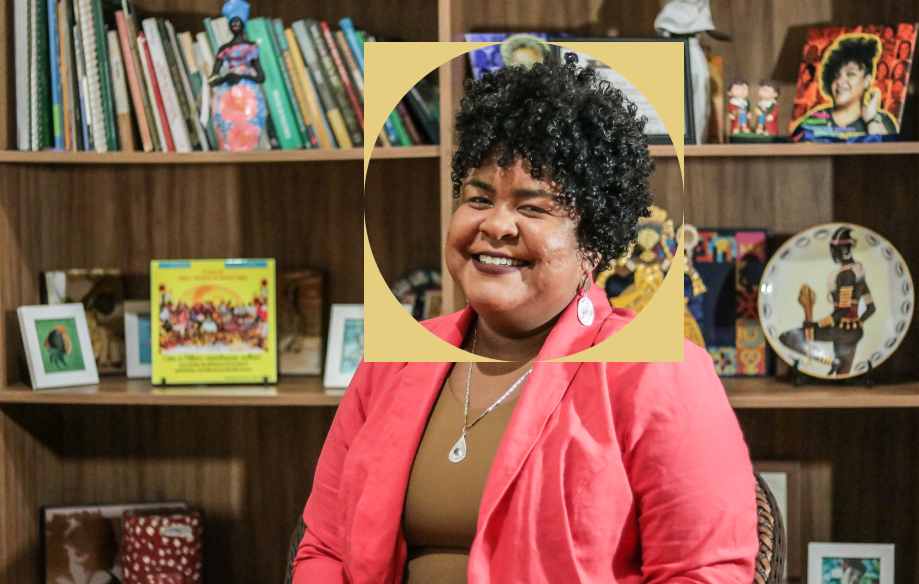
Alane Reis
Photo: Lissandra Pedreira
Offering a kind of collective mirror, the Marcha das Mulheres Negras por Reparação e Bem Viver, or Black Women’s March for Reparations and Living Well, took place on November 25, 2025, the result of a decade of mobilization. The initiative made history by bringing together three times more participants than its first edition in 2015, filling the streets of Brasília with Black women from every region of Brazil - from rural areas and small towns to state capitals and urban peripheries - as well as participants from other countries across the Americas, Africa, and Europe.
Around 300,000 dreams filled the streets of the federal capital, and in its very slogan “where our dreams meet” the March already carried this shared, mobilizing element, helping women with diverse motivations recognize themselves in collective visions and aspirations.
This effort to broaden the March’s reach was a priority long before the event itself and included work to promote communication alignment around key messages, as well as to expand dialogue with audiences that had not yet been mobilized.
Alane Reis, who served as co-coordinator of communication and political liaison for the March, explains that a crucial part of this process was building a communication ecosystem capable of ensuring that the collective voice of Black women was present across a wide range of spaces - from the streets to social media, from mainstream outlets to activist media.
“It was a collective space that brought together civil society organizations, philanthropy, media, independent communicators, artists, and content creators. It became a privileged forum for shaping the March’s communication strategies and actions over six intense months,” she says.
She adds that, within this space, participants contributed their expertise, staff time, and institutional relationships. “Early in this process, we realized that the plurality of women and institutions involved was our main strength, and we worked with that as a central tactic.
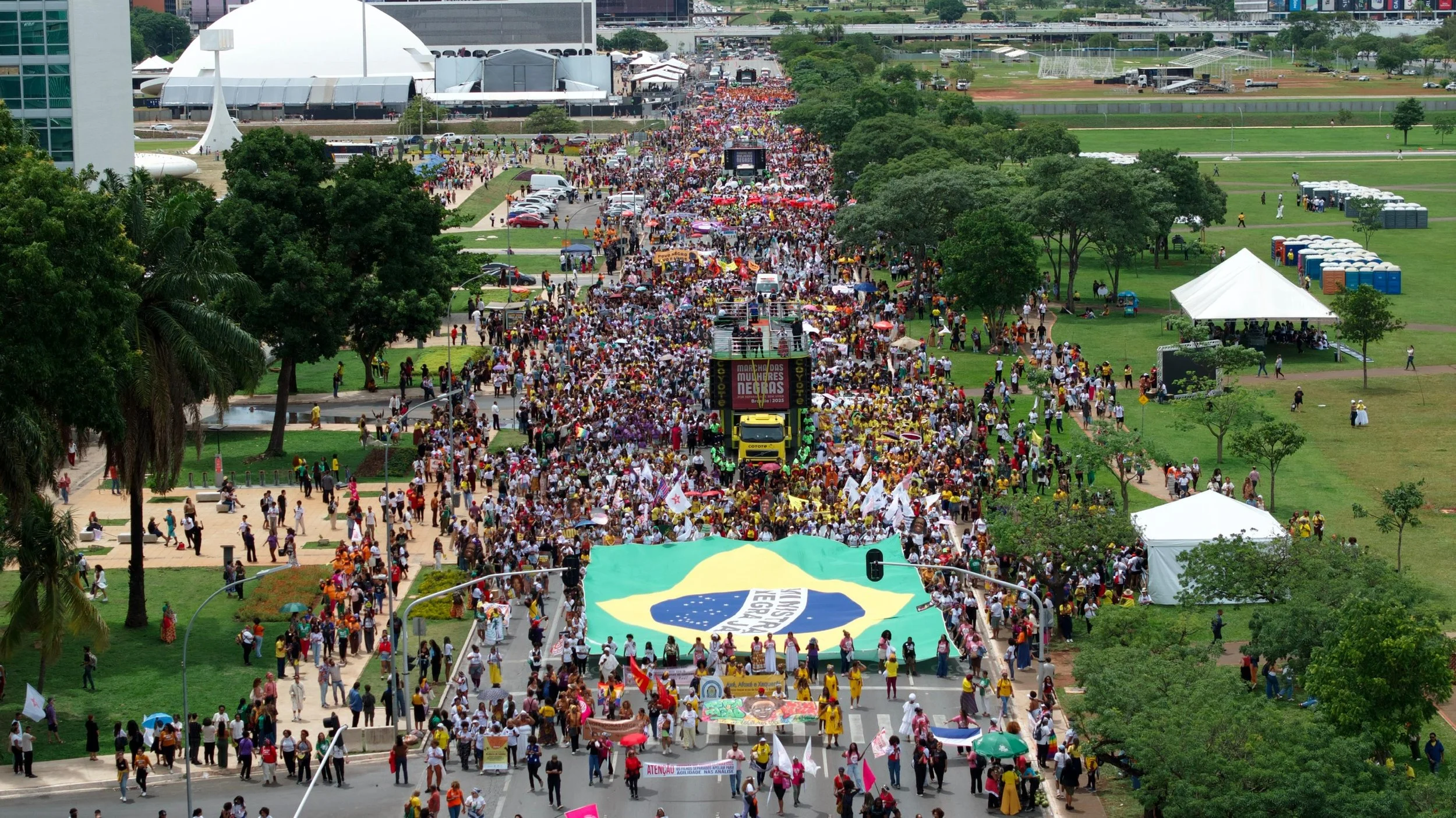
Photo: Gabriel Albernás / Reproduction
When she compares the two editions of the March and reflects on what shifts in the public debate when so many Black women come together in a mobilization like this, Alane notes that, over the past decade, the anti-racist struggle and women’s rights have gained ground in public discourse, even amid the parallel intensification of conservative rhetoric.
“The March shows Brazilian society that we, Black women, are the main protagonists of these struggles and, beyond that, reaffirms our power of political coordination and social mobilization. An act of this scale, which brought 300,000 people to the federal capital, mobilizing organizing committees in more than 420 cities across Brazil, and drawing participation from groups in 40 countries, compels Brazilian society to listen to what we have to say,” she celebrates.
A journalist with a master’s degree in Communication, Alane is the executive coordinator and content editor of Revista Afirmativa, as well as the coordinator of the communication program at Odara, the Black Women’s Institute. She is also the activist co-responsible for communication for the Black Women’s Network of the Northeast and for the National Coalition of Black Women’s Organizations (AMNB, the acronym in Portuguese).
Born in Salvador, Bahia, she trained as a journalist in Cachoeira, a town in the Recôncavo region where her father’s family is from and where she first became involved in political activism in a more structured manner. “They instilled in me a love for Blackness and for everything that comes with it: collectivity, resistance, and the creativity to forge arrangements of joy amid hardship,” she recalls.
Within Black women’s movements, she found in the public sphere something she had long recognized in her family and community life. “Black women were essential leaders and, even when silenced by the logics of racism and sexism, they found strength and refuge in expression. In whispered prayers; in adult conversations overheard by young girls; in the songs played and sung aloud; in the dialogues of the soap operas we watched; and in the generations who discovered literature and written poetry. We all shared a deep love of words,” she reflects.
This admiration for words encouraged Alane to study and learn about moments in Brazilian history when Black communities organized to shape the political project of the nation they envisioned. She explains that, in the contemporary context (i.e., over the past 50 years) marches have functioned as Black resistance methodologies that speak to the nation, society, and politics, and seeing this reflected in the Black Women’s March for Reparations and Living Well energizes her. “It makes me believe that we are continuing this long history of struggle for the nation we want, in a political moment that is ripe for disputes over narratives, spaces, and the valuing and recovery of memory,” she says.
She adds that this does not mean social and economic conditions are favorable. “Quite the opposite. Racism, in all its nuances, has reached levels of cruelty and annihilation far more intense than in years past, as so many studies have shown. What is different in the current context is how the discourses of Black women’s movements have reached people in a more direct way,” she concludes.