

When a quilombola woman falls, the quilombo rises with her
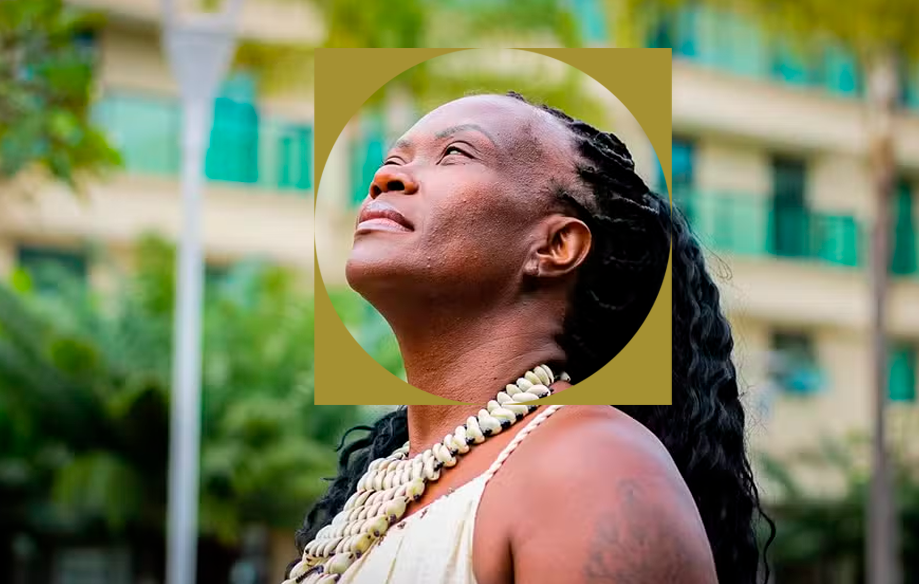
Selma dos Santos Dealdina Mbaye
Photo: Pedro Garcês / Conaq
The Marcha das Mulheres Negras por Reparação e Bem Viver, held in November 2025, marked a historic moment. From the National Museum to Brasília’s Ministries Esplanade [the broad boulevard that houses Brazil’s federal ministries] leaders from the Black movement, quilombola communities, members of parliament, and representatives of civil society organizations gathered and claimed the narrative for themselves, shifting both imagination and collective dreaming. These women occupied Brasília’s vast horizontal landscape with banners, sound trucks, and performances.
It was a practical demonstration of large-scale mobilization capacity, with diversity as one of the main outcomes of approaching strategic communication in the construction of the March and as a key choice to make visible that no single identity or agenda can speak for the plurality that exists among Black women. This narrative construction generated a sense of belonging, legitimized through actions and through documents such as the official manifesto, which states that “every Black woman has her place in the March.”
Ensuring that every Black woman had her place in the March, the days in Brasília also revealed the impact of another committee that, until now, had never existed. Dedicated exclusively to the climate agenda from the perspective of Black and quilombola women, this new space in the event’s second edition became yet another example of the expanding capacity for mobilization and the shared leadership among diverse Black women.
A member of the committee, Selma dos Santos Dealdina Mbaye, quilombola from the Sapê do Norte Territory (Angelim III and Morro da Arara), is an activist, social worker, and participant in several councils and coalitions. She is also a political organizer with CONAQ (the National Coordination for the Articulation of Black Rural Quilombola Communities), where she is part of the women’s collective, and vice president of the Casa Socioambiental Fund. For Selma, the creation of a committee centered on this issue is a natural outcome of the fact that climate is a transversal theme.
“This agenda runs through education, gender debates, health, and the issues that guide CONAQ’s work, from implementing sustainable-development projects to the struggle for quilombola territories in Brazil,” she notes, adding that the committee mobilized and brought more than three thousand quilombola women to the streets of Brasília. “These women marched to demand the titling of quilombola territories and the implementation of public policies, underscoring how deeply this is tied to the ongoing preservation and care of water, soil, and animals,” she says.
For Selma, the thematic committee helped quilombola Black women deepen their organizing around the causes they already defend. “We arrived motivated and left with the sense that we had fulfilled our responsibility by delivering documents and demanding the titling of our territories as a path toward a more just Brazil, one that takes the climate agenda seriously, free of racism and violence, and with the guarantee that we will continue to live.”
During the March’s activities, the discussions reinforced that quilombola women have always carried an agenda rooted in the everyday realities of those on the frontlines, facing the impacts of the climate emergency, impacts that include the lack of water, land, and resources. “Titled territories contribute to the preservation of the environment as a whole,” Selma argues, noting that quilombola women have long cared for the land and warned society. “We are calling attention to the fact that failing to care for natural resources, and exploiting them exhaustively, as has been done, comes at a cost. That cost appears, for example, in the increase in floods and, at the same time, in droughts. If before we could count on certain months for planting because we could count on the rain, we no longer have that certainty.”
Selma celebrates the magnitude of the 2025 action and the impact of having dedicated committees to address different themes. “The 2025 edition of the March was even more spectacular than the one in 2015. It was a landmark moment that brought together women from the city, the countryside, and the forest, from quilombola communities to artists. A unified force of Black women who, despite their differences and their own healing processes, felt heard. Women who never stopped marching and who were finally able to release a cry that had been trapped in their throats.”
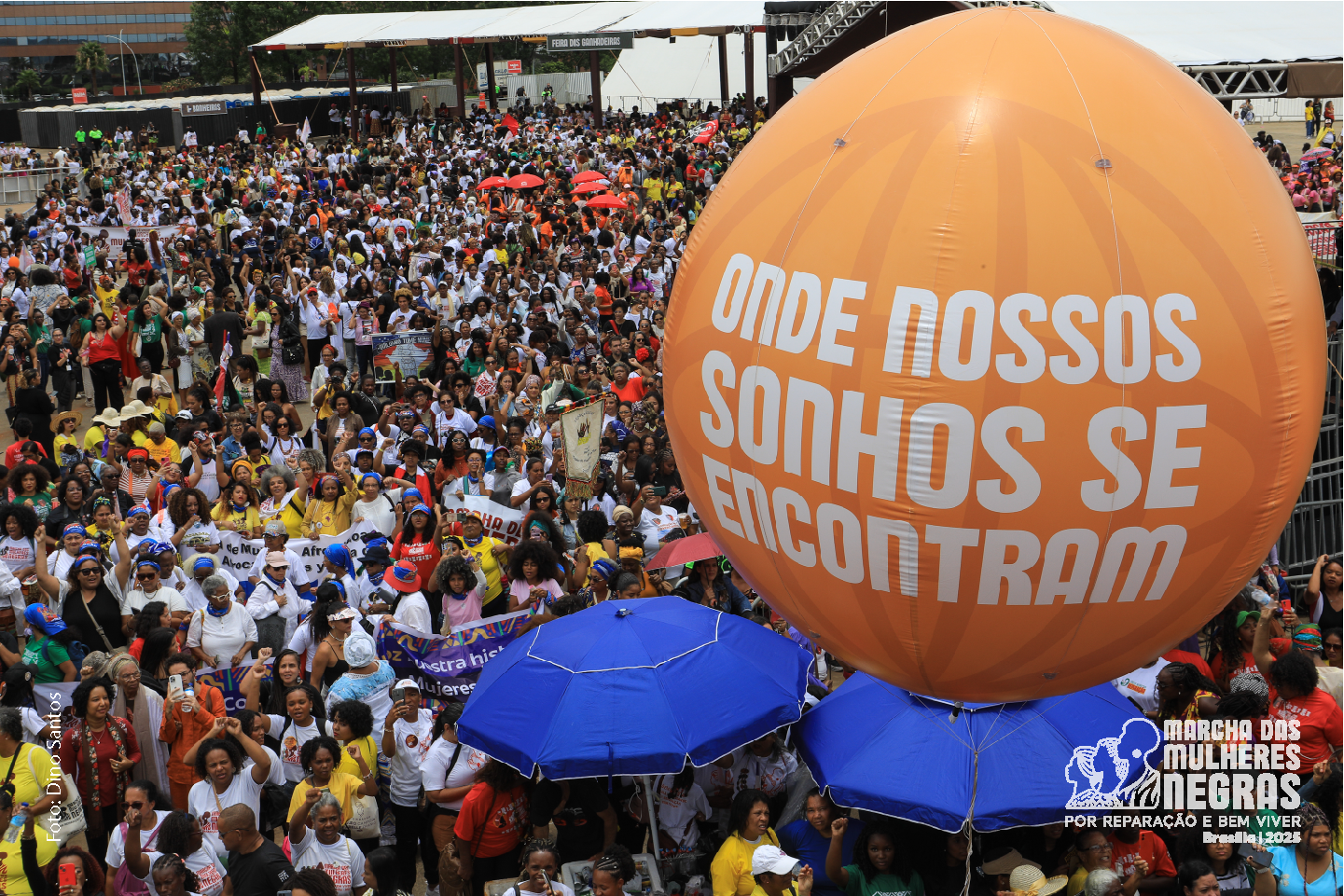
Photo: Dino Santos / Reproduction
The March and the climate committee also helped connect different fronts, drawing attention to the fact that quilombos exist across every biome in the country and in 24 states, yet this presence alone does not guarantee the safety of the peoples who inhabit these territories, nor the preservation of the nature within them. Selma notes that the March broadened this debate among the wide range of Black women present and made clear that if allies of the climate agenda are willing to support the titling of quilombola territories, they will also be contributing to confronting the climate emergency.
As one of the legacies of the discussions sparked by the March, Selma underscores that even in a country like Brazil, with more than eight thousand quilombos, Black women are not always given space to lead these debates. At the March, however, this agenda was fully heard. “The March is the largest gathering of Black women across the Americas and carries significant international resonance. The barriers it breaks also strengthen agendas such as the climate agenda and the diverse demands of quilombola women. For me, one of the messages the 2025 edition sent to society is that when a quilombola woman falls, the quilombo rises with her,” she reflects, hopeful, adding that this rising also shapes the climate agenda.