

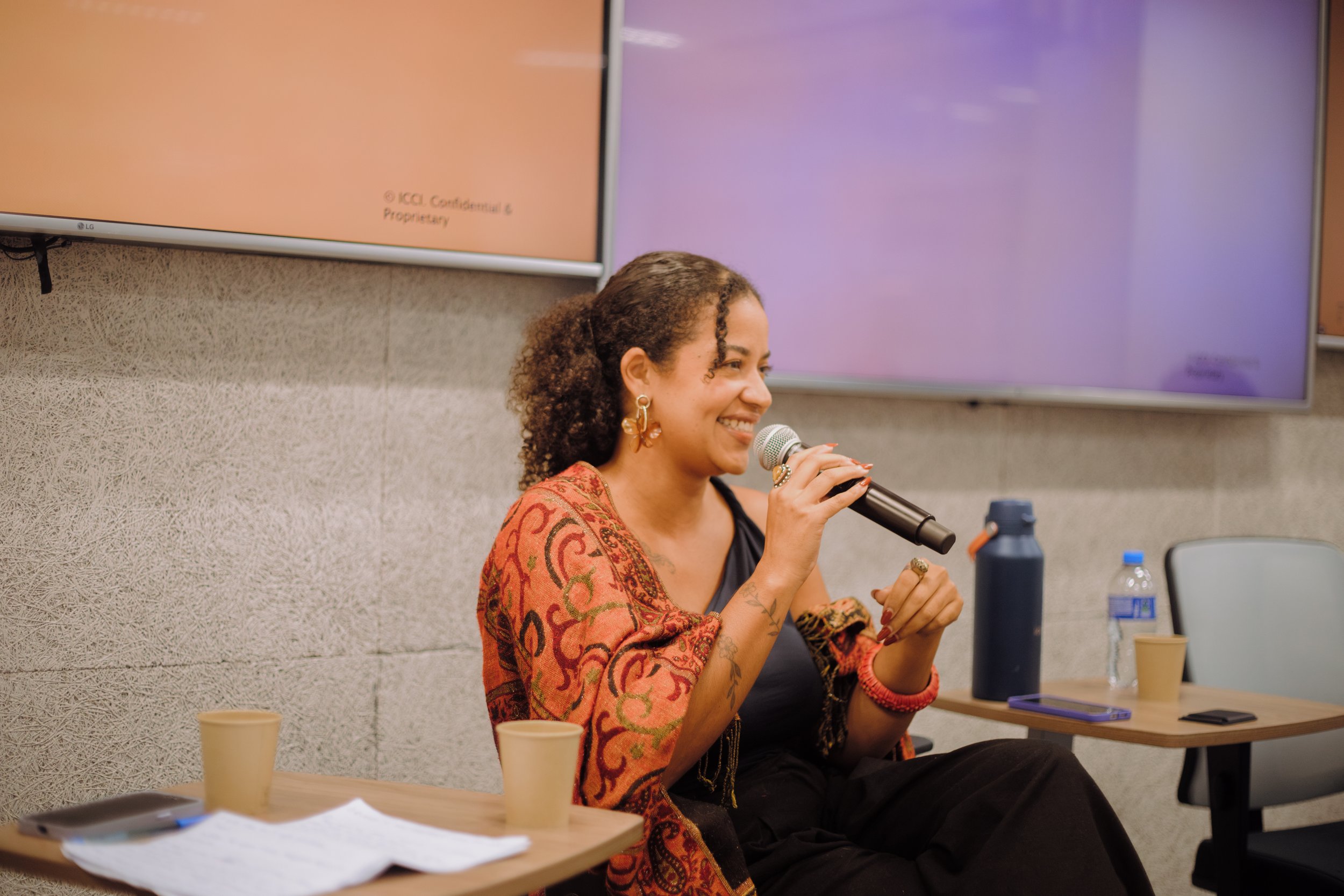
Photo: Mariana Leitão/GIFE
Monitoring and evaluation are not just about tracking results or meeting reporting requirements. When used well, they can help organizations learn from experience, refine their strategies and make better-informed decisions. The challenge is doing this without adding unnecessary administrative burden.
That was one of the key themes of a panel at Jornada GIFE, a convening focused on philanthropic grantmaking. The session, titled “Monitoring to Learn: Can We Monitor Without Adding Bureaucracy? How Can We Turn Monitoring into Learning?”, brought together Taiane de Bittencourt, ICCI's Partnerships Coordinator, Carla Christine Chiamareli (Fundação Itaú Social), Martina Otero (iCS), and Paula Chang (Luminate).
Drawing on their own experiences and lessons learned across the sector, the panelistsexplored how to make monitoring and evaluation systems more useful while keeping them light for the organizations involved. They emphasized combining metrics with qualitative insights and context, designing processes that work for both funders and grantees, and building trust between them.
Trust is especially important when it comes to sharing not only successes but also mistakes and challenges. These experiences offer valuable lessons: they help organizations make informed decisions and adjust their strategies, and they generate insights that others in the sector can learn from. The panel also discussed the growing use of artificial intelligence in developing calls for proposals, reports, and grant proposals.
About the Event
Hosted by GIFE, the two-day gathering brought together around 80 participants from 56 organizations and more than 30 speakers from Brazil and abroad to exchange ideas and discuss grantmaking practices and challenges.